

 |
New NCCN Guidelines for Patients: Quitting Smoking showcases attainable and uplifting options that empower people with cancer to achieve better health outcomes.
PLYMOUTH MEETING, Pa., 2024년 11월 13일 /PRNewswire/ -- The National Comprehensive Cancer Network® (NCCN®)—an alliance of leading cancer centers—today announced the publication of a new patient guideline designed to provide critical support and guidance for individuals with cancer who are seeking to quit smoking. Continued smoking elevates the risk of developing additional cancers, reduces the effectiveness of treatment, exacerbates treatment side effects, and is associated with shorter survival. The new NCCN Guidelines for Patients®: Quitting Smoking explains how to best use the tools that exist to help anyone quit for good. While focused on smoking cessation strategies in people with cancer, the information is also useful for smokers who do not have a cancer diagnosis.
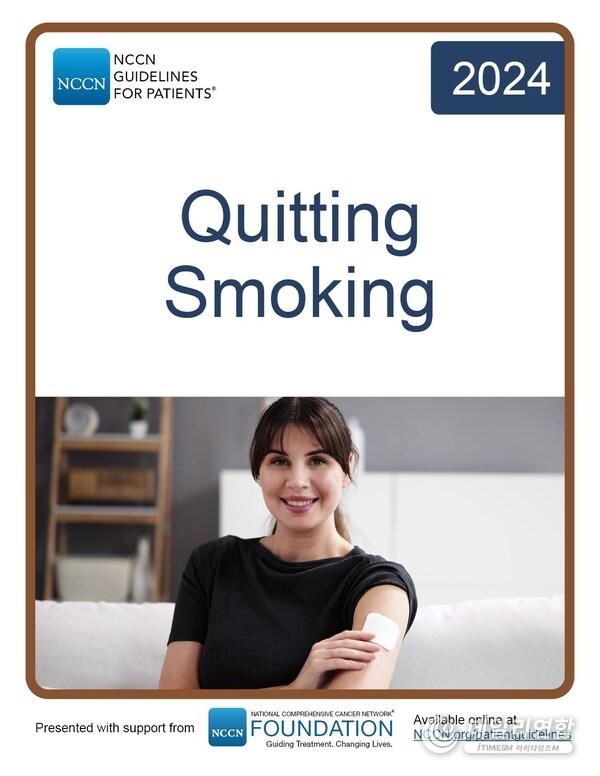
The NCCN Guidelines for Patients: Quitting Smoking are available to view or download for free online at NCCN.org/patientguidelines or via the NCCN Patient Guides for Cancer App, thanks to funding from the NCCN Foundation.
"For every patient with cancer who is smoking at diagnosis or anytime during their cancer journey, quitting is absolutely possible. Quitting earlier is better, but any time helps," said Peter G. Shields, MD, of The Ohio State University Comprehensive Cancer Center - James Cancer Hospital and Solove Research Institute. Dr. Shields serves as Chair of the NCCN Clinical Practice Guidelines in Oncology (NCCN Guidelines®) Panel for Smoking Cessation, which develops evidence-based, expert consensus-driven recommendations intended for care providers. "By empowering patients with the same information that doctors use, we aim to make quitting smoking a more achievable goal, even for those who have struggled in the past. Smoking cessation requires the active work of both the patient and the health care provider. These patient guidelines are so critical for closing that loop for best success."
The NCCN Guidelines for Patients: Quitting Smoking offers a fresh perspective and renewed hope for those who have previously tried to quit smoking without success and those who want to quit but haven't yet taken initial steps. The book takes an encouraging, judgement-free approach, recognizing that slips and lapses are common and that a combination of therapies, rather than a one-size-fits-all solution, is often the key to success. It features multiple evidence-based options, including details on nicotine replacement therapy (NRTs), behavior therapy, and non-nicotine medicines.
The NCCN Guidelines for Patients: Quitting Smoking are available to view or download for free online at NCCN.org/patientguidelines or via the NCCN Patient Guides for Cancer App, thanks to funding from the NCCN Foundation® . Printed versions are available for a nominal fee at Amazon.com. A Spanish version will also be publishing soon.
"People with cancer understand the critical importance of quitting smoking, but the addiction is powerful. These NCCN Guidelines for Patients are designed to engage patients actively in their own care, turning smoking cessation into a collaborative, two-way conversation between patient and caregivers and their care team," added Dr. Shields. "They offer easy-to-understand tools and support needed to make this challenging journey a success."
"People with cancer have more than enough stress in their lives," noted Patrick Delaney, Executive Director of the NCCN Foundation. "They and their doctors are engaged first and foremost with addressing the cancer itself. We hope this new patient guideline can be an added resource that empowers people to recognize they have options when it comes to quitting smoking, even while they may be focused on other medical treatments."
The full library of NCCN Guidelines for Patients includes more than 70 free books providing people with cancer and their loved ones with easy-to-understand information about prevention, screening, diagnosis, treatment, and supportive care for nearly every type of cancer. They have received numerous awards over the years and are widely recognized as a trustworthy source for free health information online.
Other supportive care topics covered by the NCCN Guidelines for Patients include how to manage fatigue, distress, or nausea and vomiting during cancer treatment. Visit NCCN.org/patients to view all of the books and other informational offerings in multiple languages.
To help support NCCN patient guidelines, patient webinars, and other free resources for people with cancer and their caregivers, visit NCCN.org/foundation.
About the National Comprehensive Cancer Network
The National Comprehensive Cancer Network® (NCCN®) is a not-for-profit alliance of leading cancer centers devoted to patient care, research, and education. NCCN is dedicated to improving and facilitating quality, effective, equitable, and accessible cancer care so all patients can live better lives. The NCCN Clinical Practice Guidelines in Oncology (NCCN Guidelines®) provide transparent, evidence-based, expert consensus recommendations for cancer treatment, prevention, and supportive services; they are the recognized standard for clinical direction and policy in cancer management and the most thorough and frequently-updated clinical practice guidelines available in any area of medicine. The NCCN Guidelines for Patients® provide expert cancer treatment information to inform and empower patients and caregivers, through support from the NCCN Foundation®. NCCN also advances continuing education, global initiatives, policy, and research collaboration and publication in oncology. Visit NCCN.org for more information.
About the NCCN Foundation
The NCCN Foundation empowers people with cancer and their caregivers by delivering unbiased expert guidance from the world's leading cancer experts through the library of NCCN Guidelines for Patients® and other patient education resources. The NCCN Foundation is also committed to advancing cancer treatment by funding the nation's promising young investigators at the forefront of cancer research. For more information about the NCCN Foundation, visit nccnfoundation.org.
Media Contact:
Rachel Darwin
267-622-6624
darwin@nccn.org
Photo - http://www.dailyan.com/data/photos/newswire/202411/art_660079_2.jpg
Logo - http://www.dailyan.com/data/photos/newswire/202411/art_660079_1.jpg